
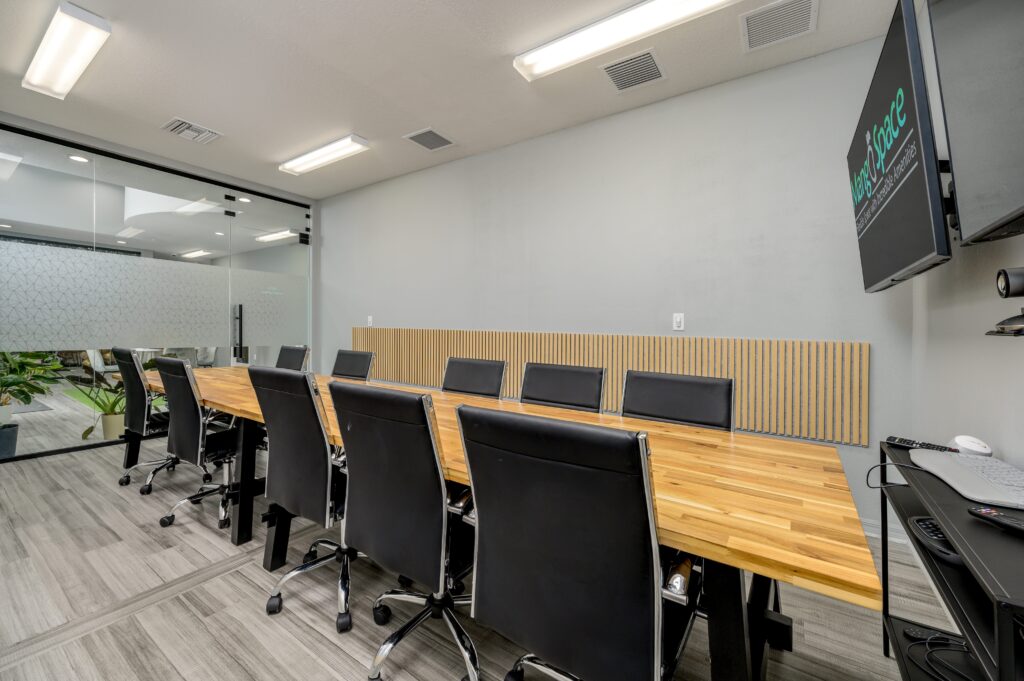
Effective team sessions depend on more than agendas and facilitators—it’s the room size that shapes interaction, focus and output. When a space feels cramped or too cavernous, communication patterns shift and productivity can stall. In this article, we’ll map how huddle rooms, small-to-medium meeting spaces and large conference or boardrooms each define collaboration roles; explore psychological and practical effects of scaling workspace; outline essential technology and amenities by room type; guide Lutz and Wesley Chapel businesses in choosing the right size at Mango Space; and share design best practices to boost engagement and efficiency.
What Are the Key Meeting Room Sizes and Their Roles in Team Collaboration?
Before diving into specifics, it helps to see how three core room types compare at a glance.
| Meeting Room Type | Capacity Range | Collaboration Role |
|---|---|---|
| Huddle Room | 2–4 people | Agile brainstorming and quick syncs |
| Small-Medium Room | 4–8 people | Focused discussions with peer interaction |
| Large Conference | 8–16+ people | Formal presentations and decision-making |
These categories set expectations for intimacy, interaction and formality as we explore each environment’s unique benefits.
What Defines a Huddle Room and How Does Its Size Enhance Agile Collaboration?
A huddle room is a compact space designed for two to four people to gather quickly, share ideas and make fast decisions. This intimate layout fosters direct eye contact and eliminates side chatter, which boosts meeting velocity. For example, small project teams can sketch concepts on a whiteboard and pivot direction in under ten minutes, keeping momentum high and reducing meeting fatigue.
How Do Small to Medium Meeting Rooms Balance Focus and Interaction?
Small to medium rooms accommodate up to eight participants, blending privacy with enough space for group dynamics. The moderately sized footprint reduces distractions yet allows side conversations at the table’s edge, enhancing brainstorming diversity. A typical four-person workshop uses this setup for deep dives into strategy while staying connected through shared screens and collaborative note-taking.
Why Are Large Conference Rooms and Boardrooms Ideal for Formal Team Sessions?
Large conference rooms support structured agendas for up to sixteen people or more, reinforcing hierarchy and presentation flow. Elevated AV systems, U-shaped seating and clear sightlines ensure everyone can see slides and speakers, which elevates professionalism. During quarterly reviews, leadership teams rely on boardroom layouts to guide high-stakes discussions and ratify decisions without spatial limitations.
How Does Meeting Room Size Influence Communication and Productivity in Team Sessions?
Room dimensions impact comfort, participation and the pace of decision-making, so it’s critical to match size to purpose. Below are three key effects:
- Small rooms → intimacy → promote candid exchanges and focused problem-solving.
- Medium rooms → balanced space → support both private discussion and collaborative brainstorming.
- Large rooms → structured layout → enable formal presentations and maintain audience attention.
Understanding these effects helps prevent common pitfalls as we explore specific dynamics in different settings.
How Do Smaller Rooms Foster Intimacy and Direct Communication?
Smaller rooms reduce physical distance, which encourages team members to speak up and listen actively. This proximity triggers more eye contact and quicker feedback loops, improving trust and idea generation. Start-up teams often use tight quarters for rapid prototyping sessions, capturing insights before ideas lose momentum.
The Impact of Room Size on Communication
Research indicates that smaller meeting rooms often foster more intimate and direct communication, leading to quicker feedback loops and improved idea generation among team members. This proximity encourages active listening and can build trust within the team, which is essential for rapid prototyping and idea development.
What Challenges Arise from Overcrowding and How Can They Be Mitigated?
Overcrowding creates distractions, muffled audio and limited movement, which can stall meetings and frustrate participants. To mitigate these issues, planners should cap attendance, optimize seating arrangements and leverage standing tables to maintain energy. Ensuring clear sightlines and portable screens further preserves productivity in compact environments.
How Do Larger Rooms Affect Engagement and Meeting Efficiency?
In larger spaces, participants may feel disconnected if voices echo or if they’re seated far from the speaker. Strategic layouts—such as U-shape or tiered seating—keep attendees engaged by reducing visual barriers. Integrating breakout zones within big rooms can also foster small-group interactions without leaving the main space.
What Technology and Amenities Are Essential for Maximizing Productivity in Different Meeting Room Sizes?
Equipping each room type with the right tools ensures smooth sessions and prevents tech-related downtime. Key components include:
- Huddle rooms: portable video bars, whiteboard walls and wireless screen sharing.
- Small/medium rooms: integrated conferencing units, adjustable lighting controls, ergonomic seating.
- Large spaces: multi-channel AV systems, stage-style lighting, acoustic panels.
These amenities create consistency and reliability across diverse meeting environments before we dive into specific technology strategies.
Which Technologies Boost Collaboration in Huddle Rooms?
Huddle rooms thrive on agility, so portable all-in-one video conferencing bars and touchscreen whiteboards enable on-the-fly idea capture. Wireless presentation docks let any participant share content instantly, keeping small teams aligned and minimizing setup delays.
How Do AV Systems and Layouts Enhance Medium and Large Meeting Rooms?
Medium and large rooms benefit from ceiling-mounted cameras, beamforming microphones and multi-display arrays that ensure clear audio-visual delivery. Pairing these systems with U-shape or theater-style seating optimizes sightlines and encourages participation from all angles.
Why Is Reliable Technology Critical to Avoid Meeting Delays and Distractions?
Unreliable connections and slow boot-ups erode focus and waste valuable time. Consistent high-speed internet, pre-configured conferencing profiles and regular equipment maintenance ensure sessions start on schedule and sustain momentum throughout.
Technology and Productivity in Meeting Spaces
Studies have shown that the integration of appropriate technology, such as high-speed internet, pre-configured conferencing profiles, and regular equipment maintenance, is crucial for ensuring that meetings start on time and maintain momentum. Reliable technology minimizes distractions and maximizes the efficient use of meeting time.
How Can Businesses in Lutz and Wesley Chapel Choose the Right Meeting Room Size for Their Team Sessions?
Local professionals need flexible solutions that scale with project demands and team growth. Mango Space offers a spectrum of meeting rooms tailored to every scenario:
- Huddle Rooms (2–4 people) with video conferencing and whiteboards.
- Small Meeting Rooms (4–8 people) with ergonomic chairs and high-speed Wi-Fi.
- Medium Conference Spaces (8–12 people) with integrated AV and presentation screens.
- Boardrooms (12+ people) with premium video systems and spacious tables.
These options empower small business owners and remote professionals to pick ideal settings without long-term commitments.
What Meeting Room Options Does Mango Space Offer for Different Team Needs?
Mango Space’s meeting rooms vary by capacity, layout and included amenities, allowing teams to reserve huddle rooms for quick stand-ups or boardrooms for client pitches. Hourly and daily bookings ensure cost-effective use whether you need an impromptu session or a full-day workshop.
How Do Small Business Owners and Remote Professionals Benefit from Flexible Meeting Spaces?
Flexible rentals eliminate overhead costs and provide professional settings that impress clients and support staff collaboration. Remote teams in Lutz and Wesley Chapel gain access to high-quality work environments without leasing an entire office, preserving budgets and boosting morale.
Where Can You Book Meeting Rooms in Lutz and Wesley Chapel for Optimal Collaboration?
Mango Space’s two Florida locations offer easy online booking and on-site support to streamline setup. Whether you need a quick huddle or a full-scale boardroom, you’ll find accommodations that align with your schedule and team size.
What Are Best Practices for Designing Meeting Rooms to Enhance Collaboration and Productivity?
Optimal room design combines layout, environment and adaptability to support varied meeting types. Consider these guidelines:
| Layout Type | Key Benefit | Best Use Case |
|---|---|---|
| U-Shape | Encourages discussion circle | Workshops and strategy sessions |
| Boardroom Style | Promotes formal decision flow | Executive meetings and client pitches |
| Open Huddle Zone | Fosters stand-up collaboration | Quick check-ins and brainstorming |
How Should Layouts Be Arranged to Support Different Meeting Types?
Arranging chairs in a U-shape invites open dialogue and visual connectivity for brainstorms, while boardroom setups emphasize hierarchy and formal presentation flow. Pop-up huddle zones with mobile tables adapt to rapid shifts between standing and seated collaboration.
Why Are Comfort, Acoustics, and Natural Light Important in Meeting Rooms?
Comfortable seating and balanced acoustics reduce fatigue, while daylight exposure improves mood and focus. Sound-absorbing panels prevent echo in larger rooms, and adjustable blinds help teams control glare without sacrificing natural illumination.
How Can Flexible Furniture and Multi-Purpose Spaces Adapt to Changing Team Needs?
Modular tables on casters, stackable chairs and mobile partitions enable quick reconfiguration for workshops, client demos or hybrid sessions. This adaptability reduces downtime between meetings and maximizes space utilization across diverse activities.
Thoughtful room sizing, technology integration and design practices together shape how teams communicate and perform. By matching space dimensions to session objectives, Lutz and Wesley Chapel professionals can harness every square foot to boost collaboration and drive results.
Book Your Ideal Meeting Space Today!